
- How Oncologists Actually Decide on Treatment
- Surgery: Removing the Cancer Directly
- Chemotherapy: Treating Cancer Throughout the Body
- Radiation Therapy: Targeting Cancer with Precision
- Comparing Surgery, Chemotherapy, and Radiation Side by Side
- Why Treatment Is Often a Combination, Not a Single Choice
- Questions Worth Asking Your Oncology Team
- Making the Decision With Your Care Team
- Frequently Asked Questions
A cancer diagnosis brings a flood of new words into a person’s life almost overnight. Chemotherapy, radiation, surgery, staging, biopsy, oncology, the list goes on. For most patients and families, the biggest question after “what stage is it” becomes “which treatment do I actually need.”
The honest answer is that there is no single best treatment for every cancer. Surgery, chemotherapy, and radiation each work differently, target cancer in different ways, and are often used together rather than as competing choices. Understanding how each one works, what it treats well, and what its downsides are can make conversations with your oncology team far less overwhelming.
This guide breaks down all three treatment paths in plain language, compares them side by side, and explains how doctors actually decide which combination fits a specific diagnosis.
How Oncologists Actually Decide on Treatment

Before comparing the three treatments directly, it helps to understand that treatment decisions are rarely made by one doctor alone. Most hospitals rely on a tumor board, a group of specialists from surgical oncology, medical oncology, radiation oncology, radiology, and pathology who review each case together.
Several factors shape the final treatment plan.
Cancer type and where it started. Some cancers, like leukemia, are blood cancers and spread through the body from the start, which makes systemic treatment like chemotherapy the natural first choice. Solid tumors, like early breast or colon cancer, often respond well to surgical removal.
Stage of the cancer. Early-stage, localized cancers are more likely to be treated with surgery or radiation aimed at a specific area. Advanced or metastatic cancers that have spread to multiple organs usually need a systemic treatment that can reach the whole body.
Treatment goal. Some treatment is curative, meant to eliminate the cancer completely. Other treatment is palliative, meant to control symptoms and improve quality of life when a cure is not realistic. The goal changes which treatments make sense.
Patient health and age. A person’s overall fitness, existing health conditions, and ability to tolerate side effects all factor into what a doctor will recommend.
Genetic and molecular markers. Increasingly, tumor testing reveals specific mutations or markers that respond better to certain drugs or targeted therapies, which can shift the treatment plan entirely.
With that framework in mind, here is a closer look at each treatment option.
Surgery: Removing the Cancer Directly
Surgery is often the first treatment considered for solid tumors that have not spread beyond their original location. The idea is straightforward: if the tumor can be physically removed, doing so eliminates the primary source of cancer cells in the body.
There are a few different surgical approaches depending on the goal.
Curative surgery aims to remove the entire tumor along with a margin of healthy tissue around it, reducing the chance that cancer cells were left behind.
Debulking surgery is used when a tumor cannot be fully removed, often because it is wrapped around vital organs or blood vessels. The surgeon removes as much of the tumor as safely possible, which can make other treatments like chemotherapy or radiation more effective afterward.
Preventive or prophylactic surgery removes tissue that has a high risk of becoming cancerous, even before cancer is confirmed. This is sometimes recommended for patients with strong genetic risk factors.
Reconstructive surgery follows procedures like mastectomy, restoring appearance and function after cancer removal.
Pros of Surgery
- Removes the tumor directly rather than relying on drugs or radiation to shrink it over time
- Often the most effective option for early-stage, localized cancers
- Provides tissue samples that help confirm the exact stage and type of cancer
- Can offer a one-time solution without repeated treatment sessions
Cons of Surgery
- Not effective for cancers that have already spread to other parts of the body
- Involves recovery time, which can range from a few weeks to a few months
- Carries surgical risks such as infection, bleeding, or complications from anesthesia
- May affect the function or appearance of the area operated on
- Not suitable for patients whose overall health cannot tolerate a major operation
Chemotherapy: Treating Cancer Throughout the Body
Chemotherapy uses drugs designed to kill or slow down fast-dividing cells, which is a defining trait of cancer cells. Because these drugs travel through the bloodstream, chemotherapy is a systemic treatment. It does not just treat one location, it reaches the entire body.
This makes chemotherapy especially useful for cancers that have spread, blood cancers like leukemia and lymphoma, and cases where microscopic cancer cells may exist beyond what imaging can detect.
Chemotherapy is used in a few different ways depending on the treatment plan.
Neoadjuvant chemotherapy is given before surgery to shrink a tumor, making it easier and safer to remove.
Adjuvant chemotherapy is given after surgery to destroy any remaining cancer cells that were too small to detect, lowering the risk of recurrence.
Primary chemotherapy is used as the main treatment, particularly for blood cancers or cancers that have already spread widely.
Chemotherapy is typically given in cycles, with treatment days followed by rest periods that allow the body to recover before the next round.
Pros of Chemotherapy
- Treats cancer cells throughout the entire body, not just one location
- Can shrink tumors before surgery, sometimes making an inoperable tumor operable
- Reduces the risk of recurrence when used after surgery
- Often the most effective option for blood cancers and widespread disease
- Can be combined with other treatments to improve overall outcomes
Cons of Chemotherapy
- Affects healthy fast-dividing cells too, leading to side effects like hair loss, nausea, and fatigue
- Can weaken the immune system, increasing infection risk during treatment
- Usually requires multiple cycles over weeks or months
- Some drugs carry long-term risks to organs like the heart or kidneys
- Not always precise, since it affects the whole body rather than a single tumor site
Radiation Therapy: Targeting Cancer with Precision
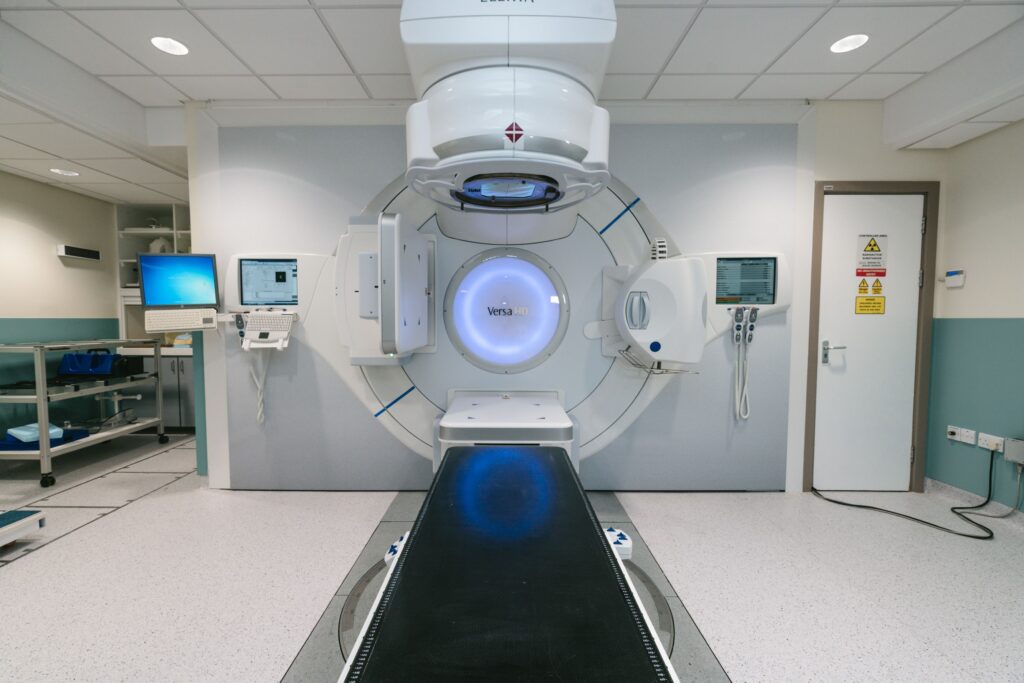
Radiation therapy uses high-energy beams, most often X-rays, to damage the DNA of cancer cells and stop them from growing or dividing. Unlike chemotherapy, radiation is a localized treatment, aimed at a specific area of the body rather than circulating throughout it.
Radiation is commonly used in a few situations.
As a primary treatment for localized tumors that are difficult to remove surgically, such as certain head and neck cancers.
After surgery, to destroy any cancer cells that may remain in the area where the tumor was removed.
Alongside chemotherapy, since some cancers respond better when both treatments are combined.
For palliative care, to shrink tumors that are causing pain or pressure, improving comfort even when a cure is not the goal.
Modern radiation techniques, including intensity-modulated radiation therapy and image-guided radiation therapy, allow oncologists to target tumors with increasing precision while sparing more of the surrounding healthy tissue.
Pros of Radiation Therapy
- Non-invasive, with no incisions or anesthesia required
- Can be highly targeted to a specific area, limiting damage elsewhere
- Often available as an outpatient treatment, allowing patients to go home the same day
- Effective for shrinking tumors that are causing pain or blocking organs
- Works well in combination with surgery or chemotherapy for many cancer types
Cons of Radiation Therapy
- Side effects are usually limited to the treated area but can include skin irritation, fatigue, and soreness
- Treatment courses can span several weeks with daily sessions
- Not effective for cancers that have spread throughout the body
- Long-term radiation exposure to an area can occasionally raise the risk of secondary effects on nearby tissue
- Requires access to specialized equipment, which is not available at every hospital
At hospitals like Subha Comprehensive Cancer Care in Hyderabad, this is exactly where a multidisciplinary tumor board becomes valuable. Rather than a patient choosing between treatments alone, surgical oncologists, medical oncologists, and radiation oncologists review the case together and build a plan suited to the specific diagnosis, stage, and overall health of the patient.
Comparing Surgery, Chemotherapy, and Radiation Side by Side
| Factor | Surgery | Chemotherapy | Radiation Therapy |
|---|---|---|---|
| How it works | Physically removes the tumor | Uses drugs to kill fast-dividing cells throughout the body | Uses targeted energy beams to damage cancer cells in a specific area |
| Best suited for | Localized, solid tumors | Widespread disease, blood cancers, microscopic residual cells | Localized tumors, post-surgical cleanup, pain relief |
| Type of treatment | Local | Systemic | Local |
| Typical duration | One procedure, weeks of recovery | Multiple cycles over months | Daily sessions over several weeks |
| Common side effects | Surgical risk, recovery pain | Fatigue, nausea, hair loss, weakened immunity | Skin irritation, localized fatigue |
| Often combined with | Chemotherapy, radiation | Surgery, radiation | Surgery, chemotherapy |
| Invasiveness | High | Low (no incision, but systemic effects) | Low (non-invasive) |
Why Treatment Is Often a Combination, Not a Single Choice
One of the most common misconceptions about cancer treatment is that a patient must choose one approach. In reality, most treatment plans combine two or even all three methods, timed carefully to work together.
A typical combination approach might look like this. A patient with a large breast tumor receives neoadjuvant chemotherapy first to shrink the tumor. Surgery follows to remove what remains. Radiation therapy is then used on the surgical site to eliminate any leftover cancer cells and lower the chance of recurrence.
This layered approach is why the question is rarely “chemotherapy or surgery.” It is more often “in what order, and for how long.”
Questions Worth Asking Your Oncology Team
Every diagnosis is different, and the right questions can make treatment decisions feel less overwhelming. Consider asking your care team the following.
- What is the main goal of this treatment, cure, control, or comfort?
- What side effects are common with this specific plan, and how are they managed?
- How will this treatment affect my daily routine, work, and family responsibilities?
- Are there newer treatment options, targeted therapies, or clinical trials relevant to my case?
- What happens if the first treatment does not work as expected?
- How will we know if the treatment is working?
Bringing a written list of questions to appointments, and asking a family member to take notes, often helps patients retain more information during what can be an emotionally heavy conversation.
Making the Decision With Your Care Team
Choosing between chemotherapy, radiation, and surgery is rarely something a patient decides alone, and it should not be. The right combination depends on cancer type, stage, overall health, and personal priorities around quality of life during treatment.
A second opinion is a reasonable and common step, especially for complex cases. Cancer centers with multidisciplinary teams, where surgical, medical, and radiation oncologists collaborate directly, tend to produce more coordinated treatment plans since every specialist is reviewing the same case from a different angle.
If you or a family member are weighing treatment options, speaking with an experienced oncology team can help clarify which path, or which combination of paths, fits your specific diagnosis best.
Frequently Asked Questions
Is surgery always the first step in cancer treatment?
No. Surgery is usually the first step for localized, solid tumors, but cancers that have spread or blood cancers like leukemia are typically treated with chemotherapy first, since surgery cannot remove cancer cells that are circulating through the body.
Can chemotherapy and radiation be given at the same time?
Yes, this is called concurrent chemoradiation and is used for certain cancers, including some head and neck and cervical cancers, because the combination can be more effective than either treatment alone.
Does radiation therapy hurt?
The treatment itself is painless, similar to having an X-ray taken. Side effects like skin irritation or fatigue can develop over the course of treatment, but they are usually managed with supportive care.
How do doctors decide which treatment combination to use?
A multidisciplinary tumor board made up of surgical, medical, and radiation oncologists reviews the cancer type, stage, and the patient’s overall health to recommend a coordinated treatment plan rather than a single isolated treatment.
Is one treatment better than the others overall?
No single treatment is universally better. Each works differently and suits different situations. The best outcomes usually come from a plan tailored to the specific cancer rather than relying on one method alone.